Stop Reacting to Litigation: Save Money Before the Case Starts with IST's Discover-E
Ep. 45: Stop Reacting to Litigation: Save Money Before the Case Starts with IST's Discover-E
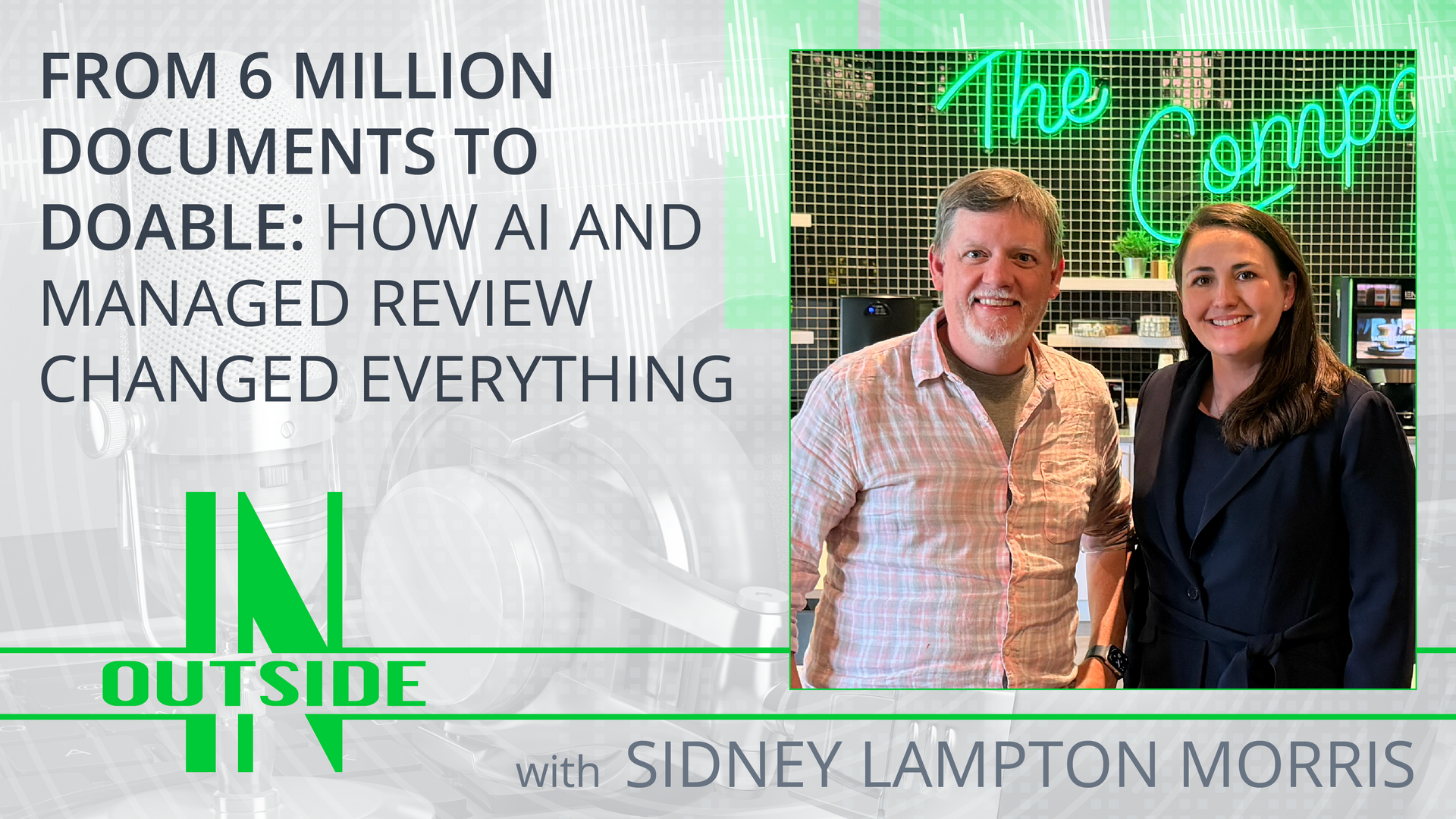
Most companies don't think about eDiscovery until they're already in trouble. But according to 30-year industry veteran and Managing Vice President Ed Fiducia, the organizations getting crushed by discovery costs aren'tlosing because of bad lawyers or bad technology. They're losing because nobody asked the right questions before the case ever started. In this episode of Outside-IN, Ed breaks down the real cost of reactive data management, why AI is a powerful tool that still requires human judgment to be defensible, and how proactive information governance is the single biggest lever legal teams have for controlling spend. From a $10 million paper database built in 1993 to the pattern-matching realities of modern AI, Ed brings 30 years of hard-won perspective to a conversation every GC, litigation partner, and legal ops leader needs to hear. If your organization is sitting on unmanaged data and calling it a storage problem, this conversation will change how you see it.
Episode Highlights
Connect with: Ed Fiducia| LinkedIn
Learn More about: Control the Cost. Reduce the Risk. Simplify Discovery.| Turning Data Chaos into Strategic Advantage| IST's Project Manager Promise: Cut Costs and Drive Success| AI in eDiscovery isn’t Optional Anymore
Key Takeaways:
- eDiscovery starts long before litigation does. The most expensive discovery mistakes happen years before a case is filed, when companies are ignoring data retention policies, hoarding outdated information, and operating without a clear picture of where their data actually lives.
- Cheap storage is creating expensive legal problems. Because storage costs have dropped to almost nothing, companies are keeping data long past its useful life. That ignored data doesn't disappear when litigation hits. It becomes discoverable, and it becomes your liability.
- If you don't have a data map, you don't have a strategy. Before a single document is collected, every legal team should be able to answer two questions: where is our data being stored, and where is it being generated? If you can't answer those, you're already behind.
- AI is a pattern matcher, not a lawyer. AI is delivering real cost savings in eDiscovery by helping teams cull large data sets faster and more efficiently. But it cannot understand context, nuance, or intent on its own. Human judgment is still required to make the work defensible.
- The "OK by me" problem is real. A one-line email means nothing without the thread that preceded it. AI can categorize documents but it cannot reliably interpret tone, sarcasm, or the cultural subtext of modern communication. That gap has real legal consequences.
- Project managers are the actual linchpin. The best technology and the best pricing mean nothing without experienced project managers who are in the data every day, building client relationships and spotting cost-saving opportunities before they disappear.
- Preserve everything. Process only what matters. The smart strategy is to preserve all potentially relevant data as a cheap insurance policy against spoliation arguments, then be surgical about what actually gets processed, hosted, and reviewed. Not everything preserved needs to be touched.
- Get your key custodians online in the first 30 days. Waiting until settlement talks break down or a summary judgment motion is denied to dive into the data is one of the most expensive decisions a legal team can make. The first 30 to 60 days of targeted custodian review often tells you everything you need to know about the shape of the case.
Listen, Watch and Subscribe!


Check out our previous episodes here: