Securing the Modern Mailroom: How IST Protects Organizations Through Comprehensive Mail Security and CBRNE Screening
Spotlight on Technology
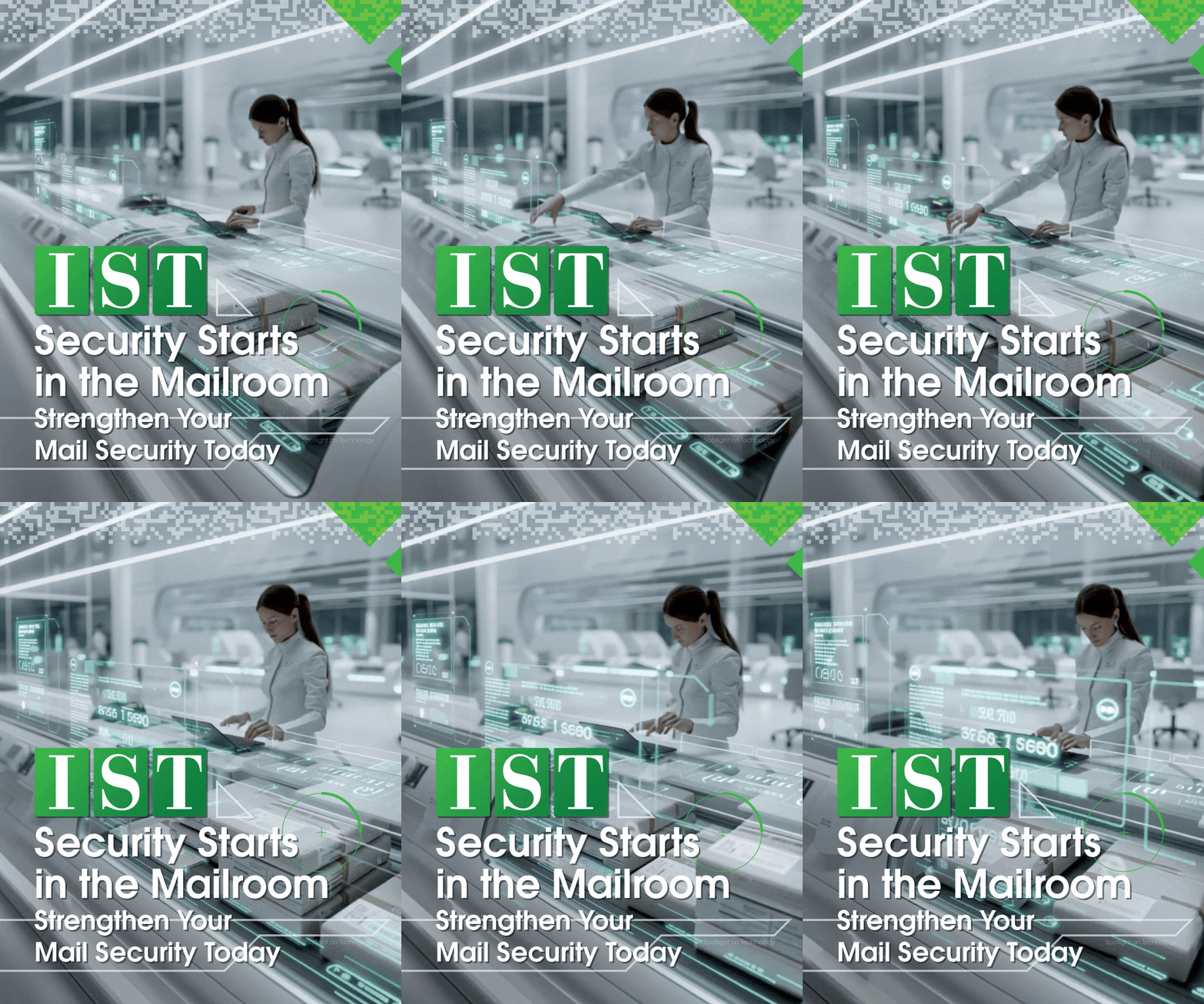
In an era of advanced cyber threats, one vulnerability is often overlooked: the mailroom. In fact, as Charles Riddervold, IST’s National Director of Operations & Proposal Strategy and subject matter expert on mail security, often reminds clients, “the modern corporate mailroom is a crucial vulnerability and a potential entry point for real threats.”
From corporate headquarters to universities, healthcare networks, and government agencies, physical mail remains a frontline risk and one that demands a strategic, layered, and highly intentional security process. Inspired by the insights Riddervold shared on the Outside-IN podcast, this blog takes a closer look at modern mail security, the evolving role of CBRNE screening, and how IST designs future-ready programs that protect people, property, and operations.
The Hidden Threat in Everyday Mail
Although physical mail feels routine, history and modern case studies show that it can carry high-consequence dangers, such as:
- Chemical powders and hazardous substances
- Biological agents
- Radiological or nuclear materials
- Improvised explosive devices
- Illicit drugs such as Fentanyl
- Hoaxes that cause costly evacuations and operational disruptions
Riddervold points out that many organizations underestimate how frequently threats come through ordinary channels. “About ninety percent of mail-borne threats come through USPS,” he notes, insinuating that public postal systems, rather than private carriers, remain the most common vehicle for threats.
For most organizations, the risk isn't hypothetical. Mail-borne incidents, hoaxes, and suspicious substances surface daily across the country, often resulting in building shutdowns, emergency response deployments, and steep financial losses.
Your Ultimate Line of Defense: CBRNE Screening
Chemical, Biological, Radiological, Nuclear, and Explosive (CBRNE) threats are the hazards that may be introduced through physical mail.
A modern mail-security program must account for all five, because those behind a potential threat have become increasingly creative. Some threats are more visible while others are microscopic, odorless, or undetectable without specialized tools.
The CBRNE framework includes:
- Visual inspection and staff training
- X-ray and trace detection
- Advanced biological sampling
- Chemical vapor detection
- Safe-box isolation and containment
- Emergency response protocols
This layered methodology mirrors the standards used in high-security government mail centers, but is tailored to each client’s risk profile, operational priorities, and budget.
On-Site vs. Off-Site Screening
One of the core themes Riddervold emphasizes is that mail security must be designed around the organization’s unique level of risk tolerance.
He often frames the conversation with a simple but important question:
“What are you afraid of?”
The answer determines whether an organization requires:
1. On-Site CBRNE Screening
Ideal for high-risk, high-visibility, or time-sensitive operations.
Features may include:
- X-ray and trace detection equipment
- Biological detection systems
- Integration with IST’s mail workflows
- Safe-box containment
- Negative-pressure air environments
This provides maximum speed, control, and transparency, but also presents a stronger investment.
2. Off-Site Screening
Best for organizations prioritizing isolation from risk. IST partners with fully certified CBRNE screening facilities to test all mail before it reaches a campus or office.
Benefits:
- No on-site exposure
- No capital investment
- Full chain-of-custody documentation
- Suspicious items contained off-premises
This model can introduce a short delay, often up to 24 hours, but offers the highest level of environmental protection.
3. Hybrid Screening Models
A blend of both approaches, rapid on-site processing of executive or time-critical pieces, while routing standard mail through off-site facilities.
This flexibility allows IST to create highly customized solutions that evolve as threats, operations, and facility layouts change.
Why Digital Mail Strengthens Mail Security
IST’s Digital Mail and DocStor solutions add an additional layer of protection, efficiency, and redundancy:
- Physical mail is securely imaged, stored, and transmitted electronically
- Chain-of-custody is documented end-to-end
- Sensitive materials can be restricted, encrypted, archived, or flagged
- Originals can be secured, destroyed, or routed per protocol
Digitizing aspects of the mail workflow reduces unnecessary physical handling and allows dangerous or suspicious items to be isolated earlier in the process.
Training: The Most Important Layer of Protection
Even the most advanced equipment is only as effective as the people using it. IST’s continuous training programs ensure that every mailroom professional is proficient in:
- Threat recognition
- X-ray image interpretation
- Chemical and biological alarm response
- Chain-of-custody procedures
- Escalation and communication protocols
- Emergency response and containment
This training is standardized across all IST locations.
A Smarter, Safer Mailroom Starts with the Right Strategy
Mail security is no longer optional, it's a crucial component of an organization. Whether your organization handles thousands of daily packages or only a few dozen, IST can help you build a tailored, scalable mail-security program that protects people, preserves operations, and ensures peace of mind.
Ready to Strengthen Your Mail Security?
To learn more about IST’s secure mail solutions, CBRNE screening capabilities, and integrated mailroom services, call (404) 582-8850 today!