
Your Records Program Is Costing You More Than You Think
Innovate & Integrate
Let’s be honest: records management rarely makes anyone’s priority list. It doesn’t feel urgent. There’s no fire alarm going off. No one is complaining — yet.
But that’s exactly the problem. The cost of an unmanaged records program is quiet, accumulative, and very real. It shows up in wasted staff hours, bloated storage expenses, compliance penalties, and the kind of litigation exposure that keeps general counsel up at night. By the time most organizations recognize the problem, they’re already paying for it.
If you’re a facilities, operations, or administrative leader responsible for how information flows through your organization, this matters to you even if no one has framed it that way before.
“The question isn’t whether poor records management costs you money. It’s how much — and whether you’re willing to find out after a crisis instead of before.”
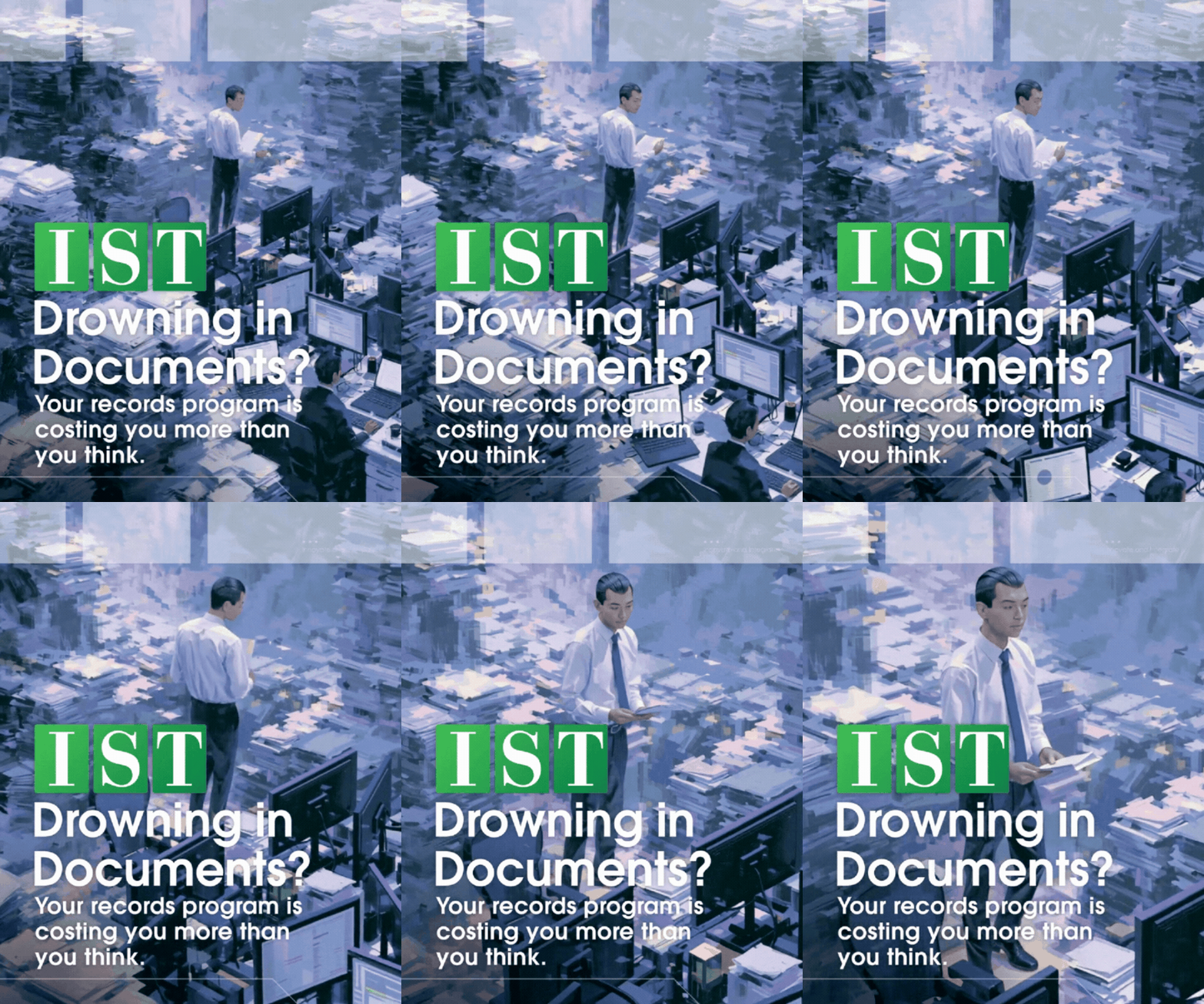
The Three Real Costs Nobody Talks About
When organizations think about records, they tend to focus on storage — cabinets, offsite facilities, or cloud licenses. But physical and digital storage costs are just the surface. The deeper costs are operational, legal, and reputational.
Cost #1: Wasted Time and Productivity
Every time an employee has to hunt down a document, digging through shared drives, waiting on someone else to locate a physical file, or trying to remember which folder version is current, it eats up time that could be spent on something that actually moves the business forward.
Multiply that search time across your organization. Finance hunting for the right invoice version. HR trying to locate a current employee agreement. Operations looking for a vendor contract before a renewal date passes. Legal scrambling for documentation during discovery. These aren’t rare edge cases. They happen every day, in most organizations, quietly and consistently.
Consider This: Industry research consistently shows that knowledge workers spend a significant portion of their week searching for information that should be easy to find. When documents are disorganized, mislabeled, or siloed across systems, that number climbs. The cost isn’t in storage, it’s in salaries paying people to do work a well-structured records program would eliminate.
Cost #2: Legal and Compliance Exposure
This is the cost that tends to be invisible right up until it isn’t.
When litigation begins, you need to produce records quickly, completely, and in a defensible manner. When a compliance audit arrives, your records need to tell a clean, consistent story. When a contract dispute arises, you need the right version of the right document, immediately.
Organizations without a structured records program often can’t do any of these things reliably. The results are delayed legal responses that increase attorney time. Sanctions or adverse inferences for failure to produce. Compliance penalties for records that should have been retained or should have been destroyed but weren’t.
Perhaps the most underappreciated risk: retaining records past their required retention schedule. Many organizations hold onto records indefinitely because no one has formalized a destruction policy. In litigation, every record you hold can potentially be discoverable. Keeping what you don’t need isn’t just a storage problem, but a liability problem.

Cost #3: Security and Breach Risk
An unmanaged records program creates operational inefficiency and security gaps. When documents are scattered across personal drives, unsecured file shares, aging filing cabinets, and half-forgotten inboxes, you lose visibility into where sensitive information actually lives.
You can’t protect what you can’t see. And in today’s environment, regulators, clients, and employees expect organizations to know exactly where sensitive data is stored, who can access it, and what controls govern it.
The risk is compounded in industries with strict data regulations, such as healthcare with HIPAA, financial services with SEC and FINRA requirements, legal with attorney-client privilege protections, and higher education with FERPA obligations. In each of these sectors, a records program isn’t optional. It’s a compliance baseline. And yet many organizations are managing it informally, with spreadsheets, shared folders, and tribal knowledge, or worse, not managing it at all.
What Good Records Management Actually Looks Like
When records are managed well, it’s almost invisible. Documents are where they’re supposed to be. Retention schedules run automatically. Access is controlled and auditable. Search takes seconds, not hours. The audit arrives and you’re ready. The legal hold request comes in and your team responds calmly, not frantically.
That’s the operational baseline IST helps organizations build through a combination of trained, process-driven people and technology designed specifically for document governance.
IST’s document management services include both on-site records and file management as part of broader facilities support, and IST DocStor, a cloud-based Electronic Document Management System (EDMS) that converts, organizes, and secures critical business documents in one centralized, searchable repository.
- Immediate Retrievability: Find any document in seconds with searchable metadata, custom folder structures, and intelligent organization. No more digging through filing cabinets or chasing down the right version.
- Governance That Runs Itself: Automated retention schedules, document alerts, and lifecycle management mean records are retained when they should be and destroyed when they shouldn’t without requiring constant manual oversight.
- Audit-Ready at All Times: Clean chain of custody, access logs, and version control mean your organization is always ready to respond to compliance reviews, audits, or legal requests without the fire drill.
- Reduced Security Surface Area: Centralizing records in a SOC 2 Type 2 certified environment reduces the risk of unauthorized access, data loss, and breach exposure that comes with scattered, ungoverned document storage.
- Productivity Returned to Your Team: When documents are easy to find, your staff spends time on work that matters rather than on searches, follow-up emails, or recreating records that should already exist.
Questions We Hear — Answered Directly
The Right Time to Fix This Is Before You Need To
The organizations that manage records well aren’t doing it because they’ve already been burned. They’re doing it because they understand that operational discipline is a form of risk management and that the time to build a records program is before litigation, before the audit, before the breach.
IST has spent more than 25 years helping organizations across corporate, legal, healthcare, and higher education environments build records programs that are practical, scalable, and built to last. Whether you’re starting from paper-based chaos or trying to bring governance to a distributed digital environment, we can help you get there without disruption to your day-to-day operations.
No fire drills. No missed details. Just records that work — so your organization doesn’t have to worry about them.
Ready to Get Your Records Under Control?
Explore IST’s Electronic Document Management and DocStor solutions to see how we can help your organization move from records risk to records readiness.
→ Explore Electronic Document Management