
When Phones Become Evidence
How Legal Teams Reduce Cost, Risk, and Review with a Modern Discovery Workflow
Mobile data has become one of the fastest-growing, most complex, and most expensive sources of electronically stored information (ESI). Yet many legal teams are still relying on discovery workflows built for email and traditional documents rather than encrypted messaging apps, images, emojis, and cross-border mobile communications.
Enterprise data is expanding at an estimated 30% annually, with mobile devices driving a disproportionate share of growth. At the same time, discovery budgets are under intense pressure, privacy expectations are rising, and courts are less forgiving of missteps.
Law firms need to explore why mobile data now sits at the center of discovery risk and cost, and how a modern, defensible, AI-enabled workflow can restore predictability. Drawing on real-world results and current market benchmarks, IST can help legal teams reduce review time, control spend, and protect defensibility without disrupting custodians or compromising privacy.
“Mobile data isn’t an edge case anymore. It’s the budget driver.”
Mobile Data Is No Longer a Side Issue. It’s the Cost Driver.
For years, mobile discovery was treated as a niche concern, something to address only when a phone was clearly relevant. That era is over.
Today, critical evidence routinely lives in:
- Apple iMessage and WhatsApp
- Slack, Teams, Skype, and other collaboration platforms
- Bloomberg and financial messaging tools
- Images, screenshots, voice notes, and emojis
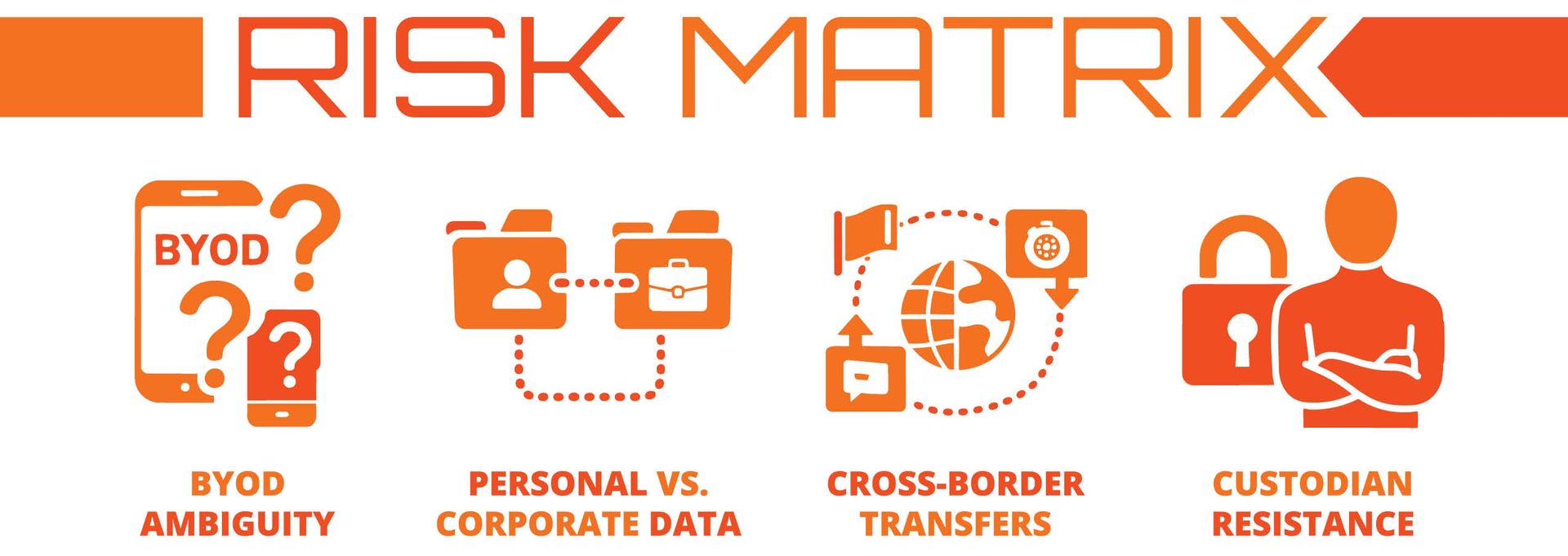
As communication habits shift, mobile data has become both unavoidable and uniquely difficult to manage. Unlike email, mobile data is fragmented across apps, frequently encrypted, and often commingled with personal content, especially under BYOD policies.
The result: higher collection costs, longer review cycles, and increased exposure to privacy and spoliation challenges.

every phone is a data vault.
The Real Risk: Cost, Privacy, and Defensibility
Discovery Spend Is Rising—Fast
The global eDiscovery market is projected to grow from $16.89 billion in 2024 to $25.11 billion by 2029, reflecting the growing complexity of modern data sources. Collection spending alone is expected to more than double, driven largely by mobile devices, cloud platforms, and connected technologies.
Mobile collections routinely exceed $250–$350 per device, before review costs are even considered. Forensic examiner rates often range from $250–$350 per hour, with expert analysis and testimony exceeding $550 per hour.
Review Remains the Biggest Line Item
Historically, 75–90% of eDiscovery cost increases have been tied to manual, eyes-on review. While review still represents the largest share of spend today, the balance is beginning to shift as AI-driven workflows mature.
Privacy Is the Hardest Part
Legal and technical experts increasingly agree: the most difficult aspect of modern discovery is not review, but navigating the “nettlesome issues of privacy” that arise before review begins.
These include:
- Personal devices used for business communication
- Custodian resistance to invasive collections
- Cross-border data transfers and blocking statutes
- Regulatory expectations around proportionality and minimization
Without a defensible strategy, these challenges can derail timelines, inflate costs, and invite court scrutiny.
Why Traditional Mobile Discovery Breaks Down
Relying on outdated, manual protocols to manage mobile data is like trying to catch rain in a colander. The data is fluid, distributed, and constantly escaping.
Traditional workflows often involve:
- Disruptive, on-site phone collections
- Over-collection of personal data
- Multiple handoffs between tools and vendors
- Inconsistent documentation and chain of custody
Each step introduces risk of delay, data loss, privacy exposure, or defensibility challenges.
A Better Model: Defensible, Mobile-First Discovery
IST approaches mobile discovery as an end-to-end workflow, not a one-off technical task.
Forensically Sound Collection: Remote or On-Site
IST supports both remote and on-site mobile collections, designed to meet custodians where they are:

Data is fluid, distributed and constantly escaping.
- Remote collection options minimize disruption to phone usage
- Clear separation of personal and corporate data
- Workflows non-technical custodians can complete confidently
- Forensically sound methods preserve metadata, dates, and timestamps
Built-In Defensibility
Every collection is backed by experienced forensic professionals who can:
- Produce written findings and affidavits
- Document chain of custody end to end
- Provide expert testimony if data integrity is challenged
This ensures that the data you collect stands up not just technically, but in court.
Where AI Actually Changes the Economics
Discovery review has long been the largest cost driver. That is finally changing.
While a skilled human reviewer can process roughly 50–60 documents per hour, modern AI systems can analyze close to 100,000 documents per hour. As a result, the share of eDiscovery spending allocated to review is projected to decline from 64% in 2024 to 52% by 2029.
AI Capabilities Built for Mobile Data
IST’s advanced analytics are designed specifically for the challenges of mobile ESI:
Sentiment & Behavioral Intelligence - Surfaces pressure points, intent, and anomalies buried within chat threads, critical for fraud, employment, and regulatory matters.
Image Recognition - Identifies relevant visual evidence even when files are renamed, altered, or stripped of metadata.
Named Entity Recognition (NER) - Automatically identifies key custodians, organizations, PII, and PHI within unstructured mobile data.
Together, these tools reduce review volume while increasing insight without sacrificing defensibility.
Proof in Practice: Real Results, Real Savings
Legal teams don’t need promises, they need outcomes. Across law firm and corporate matters, IST clients consistently see measurable improvements in speed, cost control, and defensibility when mobile discovery is treated as a strategic workflow rather than a reactive task.
Clients report results such as:
- More than 50% reduction in review time and over $40,000 saved on a single matter by consolidating hosted documents into the IST environment, eliminating redundant platforms and handoffs.
- Greater cost predictability and budget control through fixed and all-in pricing models, reducing exposure to surprise discovery bills and minimizing the risk of inefficient vendor selection by outside counsel.
- Improved data security and lower long-term discovery spend after transitioning from multiple vendors to a single IST Managed Services solution, closing security gaps and simplifying governance.
These outcomes aren’t outliers. They reflect what happens when mobile discovery is approached with the right combination of people, technology, and processes built for scale, defensibility, and real-world legal pressure.
Information Governance: Stopping Risk Before Litigation
Proactive Mobile Risk Management
IST helps organizations implement proactive protocols that reduce exposure before disputes arise.
Employee Departure Protocols - Forensic analysis confirms whether proprietary information was accessed or transferred via USB, cloud storage, or messaging platforms during layoffs or terminations.
Security Without Compromise
IST is a SOC 2 Type II organization and protects data using:
- SSL-128 encryption in transit
- AES-256 encryption at rest
- FIPS 140-2 certified media
The Single Tool Workflow - By keeping data in a single, secure environment from collection through production, IST reduces the risk of data being lost, corrupted, or exposed during duplication across platforms.
all inside one secure environment

collection

PROCESSING

REVIEW

PRODUCTION
Pricing That Matches Reality
Modern legal teams demand predictability, and IST offers flexible pricing models designed to align with case size and risk profile, including:
- Tiered pricing
- All-in pricing (processing and exports included)
- Subscription-based managed services
Transparent benchmarking allows clients to plan confidently, even as data volumes fluctuate.
Why IST?
People who listen. Tech that works. Agility that delivers.
IST combines experienced professionals, purpose-built technology, and the ability to pivot fast when discovery changes—because it always does.
When mobile data threatens to overwhelm budgets and timelines, IST brings clarity, control, and defensibility back to the process.
Take the Next Step
Mobile discovery doesn’t have to be unpredictable or painful.
Talk with an IST litigation support expert to see how a modern, defensible mobile workflow can reduce risk, cut costs, and help your team move faster with confidence.
References
Reddit – r/eDiscovery. The Plight of Undervalued Document Review. Practitioner discussion highlighting review labor pressures, cost compression, and burnout within traditional discovery models.
RAND Corporation. Document Review and Production in Civil Litigation (Occasional Paper OP-183). Foundational research on discovery cost drivers and the disproportionate impact of manual review on litigation spend.
Ball, Craig. Yes, AI Is Here. No, You’re Not Gone. Commentary on the practical role of AI in modern discovery, emphasizing augmentation—not replacement—of legal judgment.
eDiscovery Journal. EDJ Brief: Elevate at Legalweek 2025. Industry reporting on AI adoption trends, market pressures, and evolving discovery workflows.
Complex Discovery. 2024–2029 eDiscovery Market Size Mashup. Market analysis projecting eDiscovery growth, shifting spend allocation, and increased demand for advanced, defensible solutions.